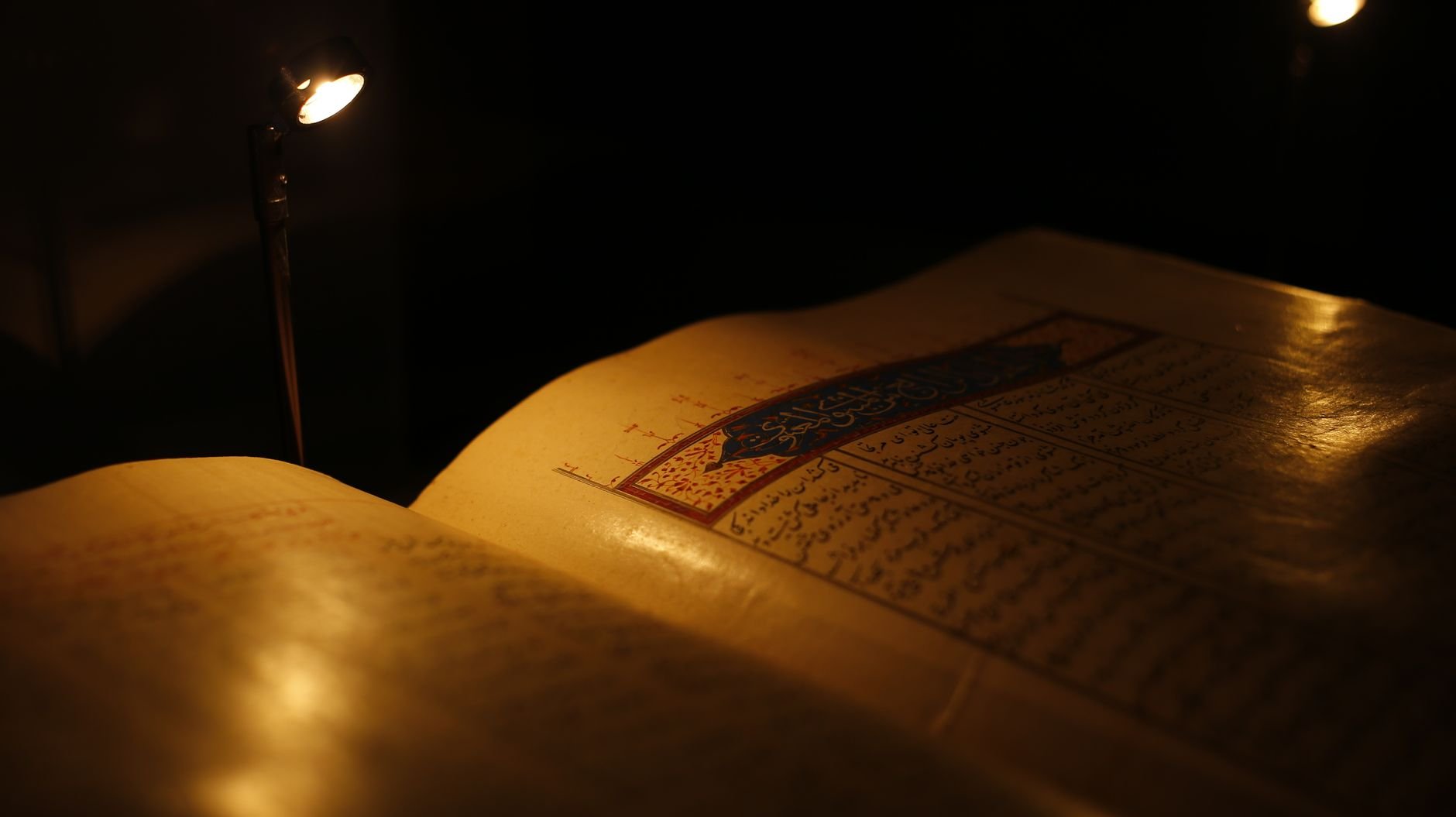
Close-up of an ancient manuscript illuminated by warm light, rich with historic detail.
حِكَايَة — Hikaya

The Arabic Story
You've Been Waiting
to Read

A 50,000-word graded narrative in Modern Standard Arabic, written precisely for B1 learners ready to go deeper.

Real Arabic. Real stories. Real progress.

One continuous story.
Fifty thousand words.
One plateau, broken.

Most Arabic learners reach a point where they can read slowly, understand the grammar, and follow simple texts. Then everything stalls. Textbook exercises repeat the same constructions. Short-story collections jump between contexts. Children's apps treat adults like beginners.

Hikaya is different. It is a single, coherent narrative in Modern Standard Arabic — a real story with real characters, a real plot, and real language — calibrated chapter by chapter to carry you from B1 to B2.

Not a vocabulary list. Not a grammar drill. A story you actually want to know the end of.
The intermediate plateau is not a language problem.
It is a content problem.

Learners stuck at B1 do not need more grammar tables. They need extended, compelling reading material written at exactly their level — material that trusts them to handle a real story. Hikaya exists because that content did not exist.

Built for the reader
the textbooks forgot

Every adult Arabic learner knows the feeling. You studied the roots and the patterns. You can parse a sentence and find your way through a news article with patience. But when you pick up a real book, you feel the gap. The sentences are longer. The vocabulary is wide. The story assumes you already live inside the language.

Hikaya was designed from the ground up for that reader. Every chapter is written in authentic Modern Standard Arabic — no simplified registers, no childlike vocabulary, no dialect shortcuts. The language respects your intelligence and the time you have already invested.

What makes Hikaya different is the calibration. New vocabulary enters the story in context, carried by the narrative rather than dropped in a glossary. Sentence complexity rises gradually across chapters. You do not notice you are being taught, because you are too busy finding out what happens next.

A person reads a book at a warm lamp-lit desk.
Reading: the skill that transfers to everything else
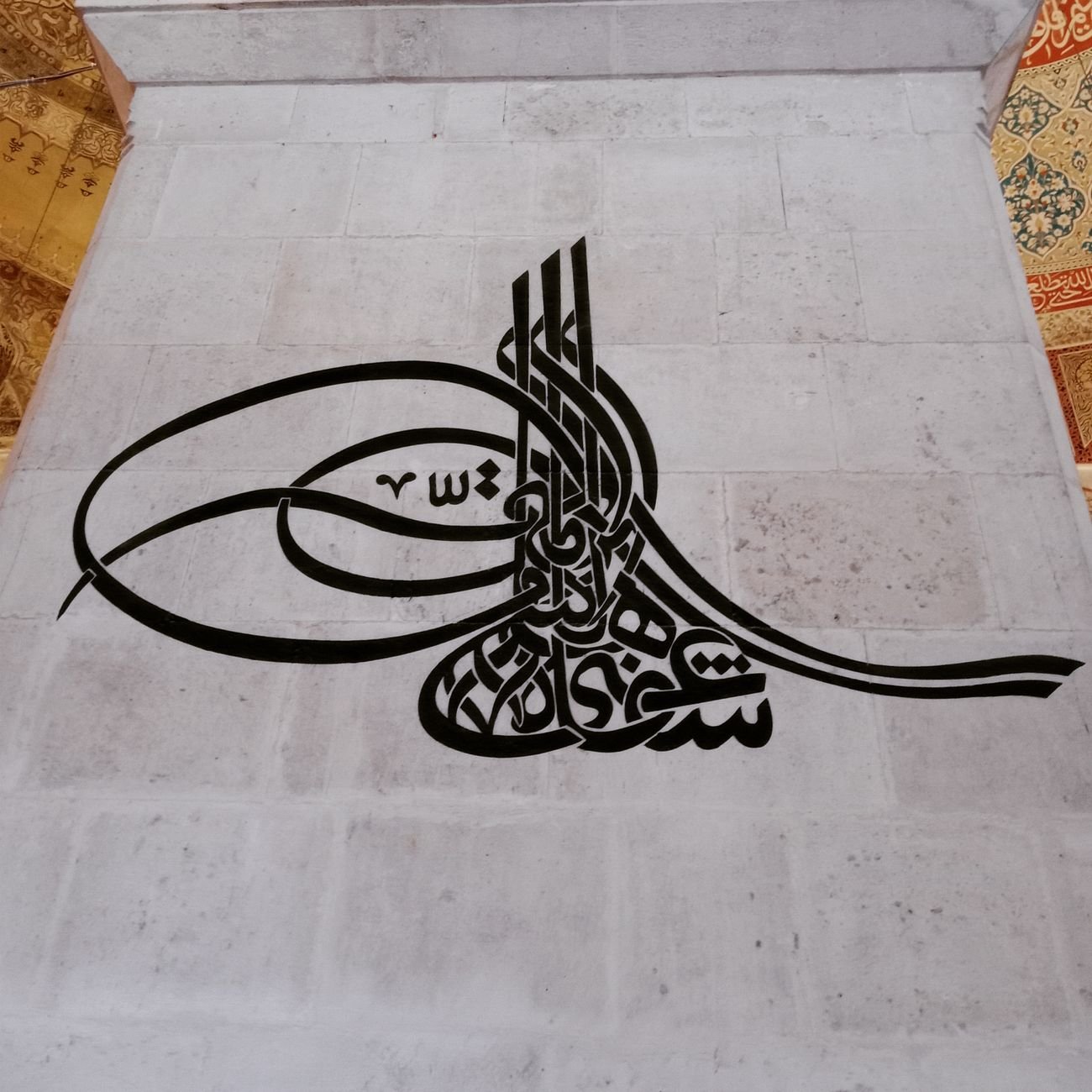
Elegant Arabic calligraphy artwork on a stone wall, showcasing Islamic art.
حِكَايَة

From the Arabic root ح-ك-ي — to tell, to narrate, to recount. A hikaya is a story, a tale, a telling. It is also the word for a thing that resembles another — because a story, told well, resembles life.

What you get

A reading experience built
for your level

The complete narrative

All 50,000 words of Hikaya — one continuous story from chapter one to the end. No installments, no waiting. Read at your own pace, in a single session or across many.

Chapter-by-chapter structure

Each chapter is calibrated to B1 reading level. The story builds complexity across chapters, so your skills grow alongside the narrative without ever feeling overwhelming.

Vocabulary in context

New words arrive inside the story, where meaning is carried by narrative. You learn the way readers learn — by meeting words where they live, not in a list at the bottom of a page.

Modern Standard Arabic throughout

Hikaya uses Fusha from the first page to the last. The register is consistent, the grammar is correct, and the language is the kind used in literature, journalism, and formal speech.

Reading stamina built in

The single biggest obstacle for intermediate readers is fatigue. Hikaya is paced to build your ability to sit with longer texts — not to exhaust you, but to extend what you can hold.

A story worth reading

The best thing a graded reader can do is make you forget you are studying. Hikaya is written to be genuinely interesting — with characters, tension, and a narrative that pulls you forward.

How Hikaya
teaches through story

Most graded readers feel like graded readers. The writing is simpler than real Arabic, the vocabulary is controlled to the point of stiffness, and you can feel the teaching apparatus beneath every sentence. Hikaya is designed differently: the pedagogy is structural, not visible.

A cozy setup with open book, ceramic cup, and stacked books on a wooden table.
  1. Start where you are

    Hikaya opens at a level accessible to any learner who has completed formal A2 study or equivalent — someone who reads slowly but reads. The opening chapters are deliberately welcoming: familiar grammar, moderate vocabulary density, and a story that gets going quickly.

  2. Context carries meaning

    Every unfamiliar word is introduced within a sentence that makes its meaning guessable. This is not accidental — the story is written so that comprehension is possible even when your vocabulary has gaps. You build new words through reading, not through memorization.

  3. Complexity rises with you

    As the story progresses, sentence structure becomes more varied, subordinate clauses lengthen, and the lexical range widens. The change is gradual enough to feel natural. You are not suddenly dropped into B2 territory — you arrive there because the story carried you.

  4. Stamina builds chapter by chapter

    Reading in a second language is a physical skill as much as a cognitive one. Hikaya is long by design. Each reading session extends what you can hold. By the end, you will have read more sustained Arabic than most learners read in years of study.

  5. Arrive at B2 without noticing

    The plateau breaks not through effort alone but through accumulated exposure. When you finish Hikaya, you will be reading at B2 level. More importantly, you will know what reading Arabic feels like from the inside.

Questions from
Arabic learners

If your question is not here, write to us — we read every message.

Do I need to know Arabic script to read Hikaya?

Yes. Hikaya is written in Arabic script (no transliteration), and it assumes you can read Fusha at a functional level — slowly is fine. If you are still learning the alphabet, Hikaya will be waiting for you at the other side of that. It is designed for learners who can read but want to read much better.

How is this different from a short-story collection?

A collection of short stories gives you context switching — every story resets the vocabulary, the characters, and the setting. Hikaya is one continuous narrative. The benefit is compounding: words recur, characters develop, and your brain builds a genuine lexical and syntactic map of a shared world. That is how stamina grows.

I studied Arabic formally but I have been stuck for two years. Will this help?

This is exactly the reader Hikaya is built for. Formal study gives you the grammar foundations that make Hikaya accessible. What formal study rarely gives you is extended reading practice at your level. Hikaya fills that gap directly.

Is this Fusha or a dialect?

Modern Standard Arabic (Fusha) only, throughout. No dialect switching, no simplified register. The language is the same Fusha used in Arabic literature, news media, and formal writing — so the reading skills you build here transfer directly to those contexts.

What level do I need to be to start?

Hikaya is written for B1 learners, which means you should be able to read a simple Arabic text slowly and with some comprehension — roughly equivalent to completing A2 study. If you are still at true beginner level, other foundations need to come first. If you are intermediate and stalled, this is for you.

How do I read it — is this a physical book or digital?

Hikaya is available digitally. Sign up below and we will let you know the moment it is ready and how to access it.

Join the list

Be the first to read
Hikaya

Hikaya is coming. Sign up and we will let you know when it is ready to read — and give you early access when we open. No daily emails, no noise. Just Hikaya, when it is time.

One email when Hikaya is ready. That is all.

Stay in the loop

Get updates, tips, and news delivered to your inbox.